
Bayou Bound: Beignets, Ghosts, and a Little Lagniappe
When my job at the State encouraged everyone to attend an annual seminar or conference to “broaden our professional horizons,” I saw an opportunity—not just for education, but for adventure. The Enterprise Risk Management seminar in New Orleans sounded like the perfect excuse to earn a few work hours while soaking up some soul. The State covered my airfare and hotel stay, but there was no way I was flying solo through the Big Easy. We paid out of pocket to fly my ex-husband down on a cheaper flight so we could turn it into a mini-vacation. It was the first time I’d ever flown alone, and, honestly, the first time I realized I could.
Day One — Cemeteries and City Park
We landed on November 10, 2019, buzzing with wanderlust and mild nerves, and checked into an Airbnb just a short walk from St. Roch Cemetery.
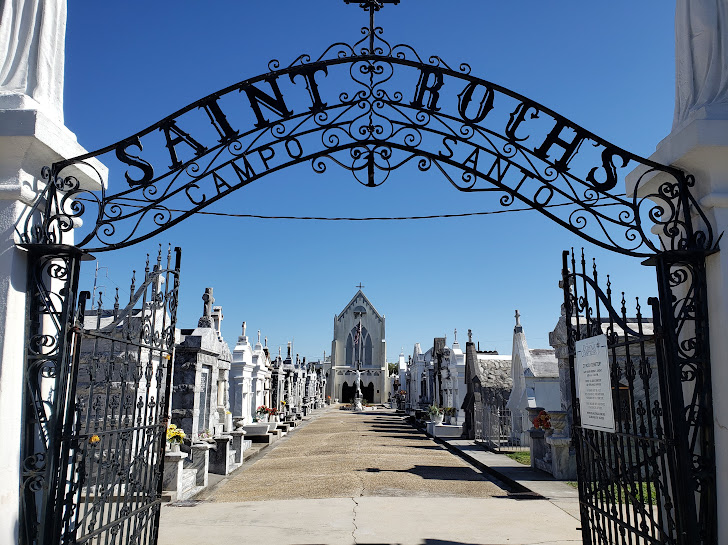
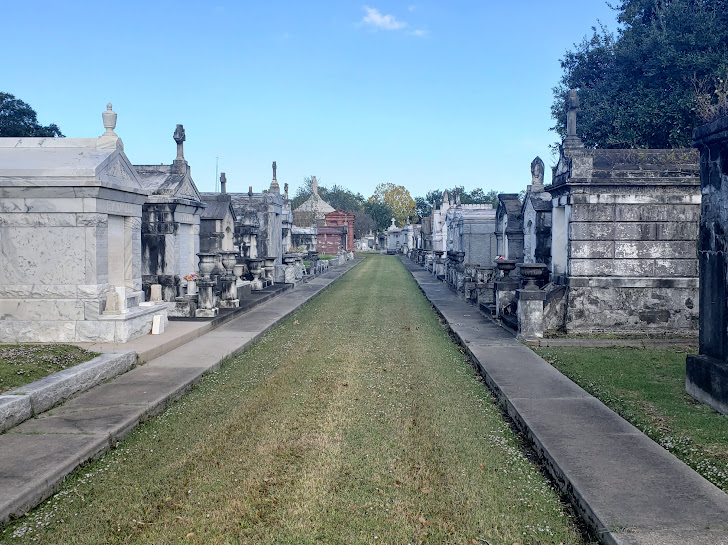
Founded in the mid-1800s, this cemetery became famous as a site of healing after a priest prayed for his congregation during a yellow fever outbreak—none of them died. People still leave prosthetic limbs, crutches, and other tokens of gratitude at the chapel as offerings to St. Roch. Because of the city’s high water table, nearly all of New Orleans’ cemeteries are above ground, giving them their signature “city of the dead” look.
After exploring the marble labyrinth, we drove to Metairie Cemetery, once a horse-racing track and now home to some of the grandest tombs in the country. Ornate mausoleums lined the paths like mansions for the afterlife. Getting there was a bit of a trek—our Uber driver struggled with the GPS, which didn’t seem to realize we hadn’t exited the freeway yet. The detour took us past one of the city’s homeless camps, and he told us how rough things had gotten for many people after Hurricane Katrina. It was a sobering contrast to the beauty of the cemetery; two sides of the same city, both holding stories of survival.
The rest of the day was devoted to the French Quarter, where we hit the New Orleans Historic Voodoo Museum and found a Pimm’s Cup at Napoleon House—a drink I’d first tried in England and was thrilled to rediscover here. We toured the New Orleans Jazz Museum, then headed to City Park, where we posed with massive live oaks, peeked into Story Land, and stood under the Singing Oak, a tree laced with wind chimes tuned to a pentatonic scale. When the wind moves through it, the whole thing sings—a strange, calming kind of magic.
Day Two — Witches, Tombs, and Vampires (Oh My)
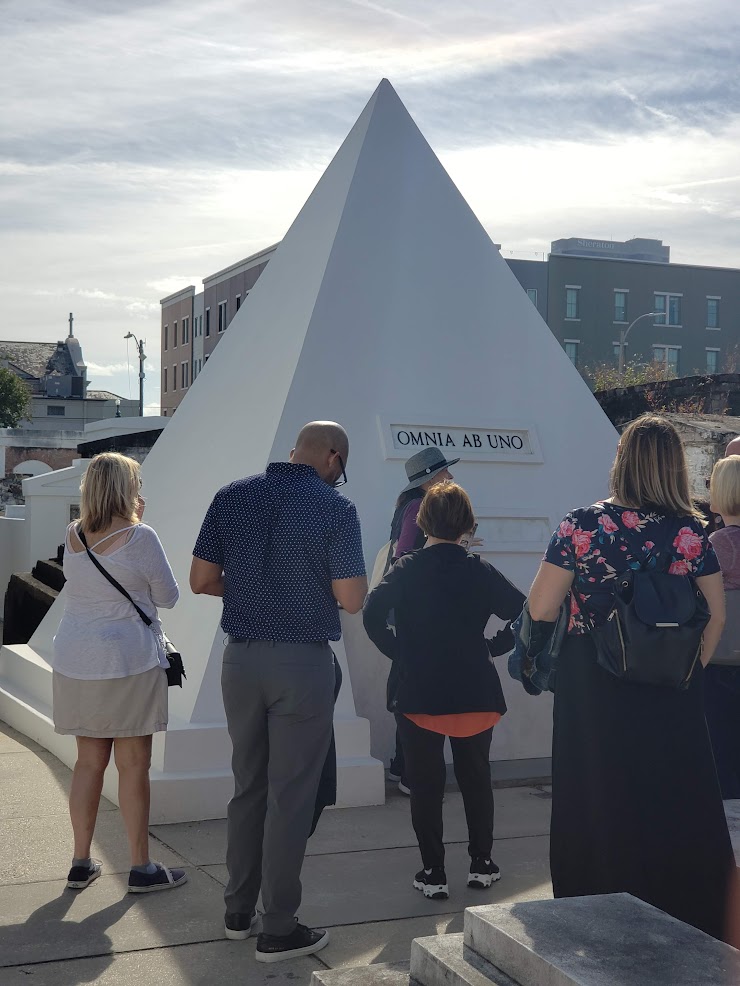
We started the morning with our first tour: the Witches Brew French Quarter, Cemetery & Voodoo Walking Tour. One highlight was St. Louis Cemetery No. 1, where Nicolas Cage—in full National Treasure mode—owns a gleaming white pyramid tomb. He purchased it before his bankruptcy, and because it sits on church property, it couldn’t be seized. The guide explained how, with limited space, the tombs are reused—older remains respectfully moved to the back to make room for new burials.
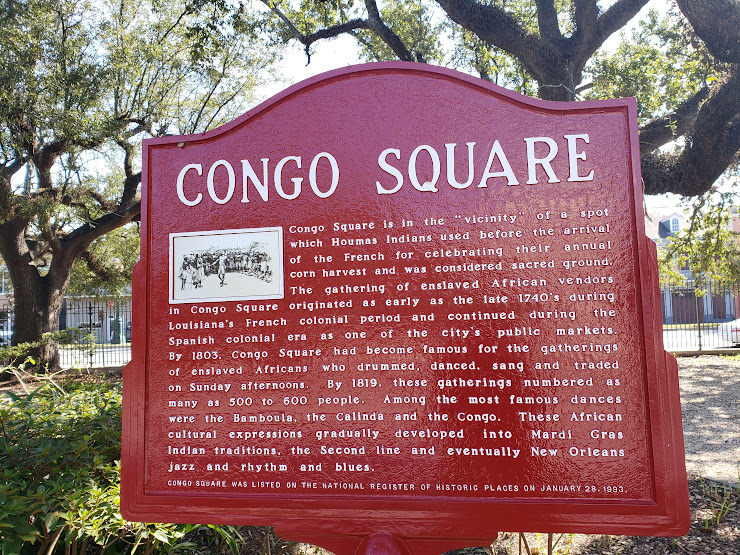
We visited Jackson Square, once the heart of colonial New Orleans, and Armstrong Park, home to Congo Square, where enslaved Africans once gathered on Sundays to drum and dance—the birthplace of jazz itself. The guide also shared stories of the Quarter’s unique architecture, a collision of French and Spanish influences with wrought-iron balconies, pastel facades, and secret courtyards tucked behind tall shutters.
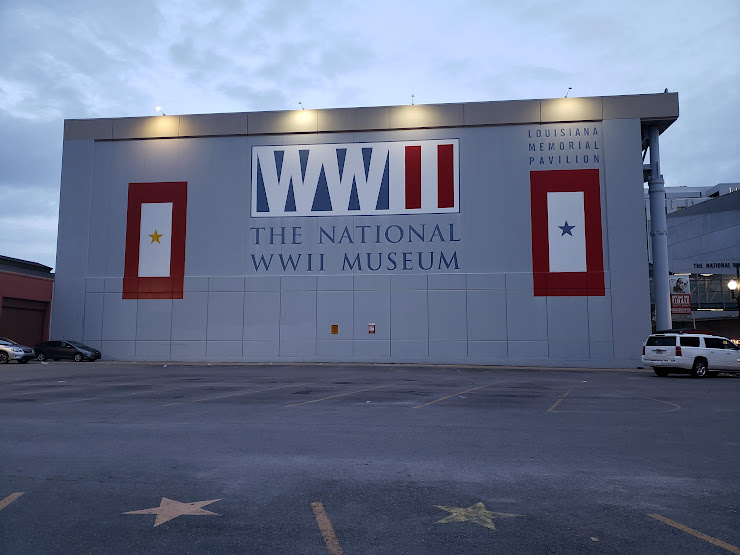
From there, we stopped at the National WWII Museum, unaware that it was Veterans Day and that a major televised ceremony was taking place. We decided to grab lunch in the café and wait for the crowds to thin out, but they never did, so we explored what we could before heading out.
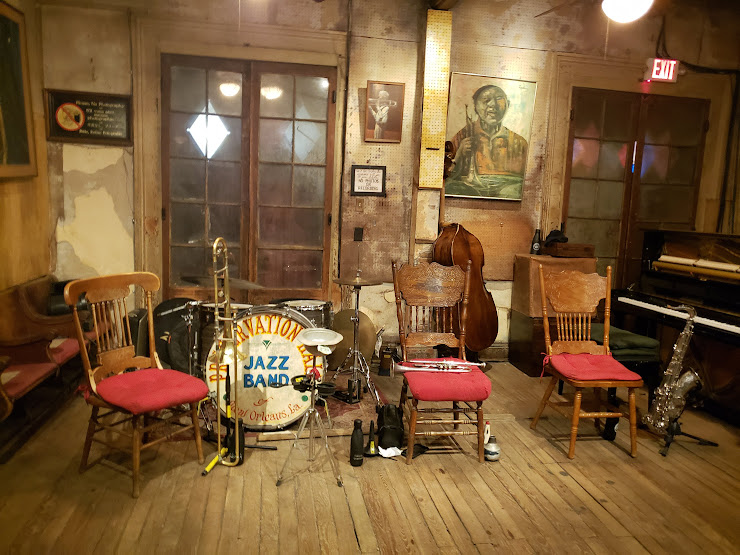
That evening, we cooled off—literally, because it was surprisingly chilly for Louisiana—at Preservation Hall, a beloved hole-in-the-wall venue born in the 1960s to keep traditional jazz alive. The room was packed shoulder-to-shoulder, but hearing those brass notes echo through the old wood felt like time travel.
After that came our second tour: Witches, Ghosts & Vampires, which ended up being my favorite of the trip. We paused outside the Pharmacy Museum, where our guide gave a lightning-round history lesson before trying to convince us a ghost haunted the alley next door. We stopped by Jackson Square again, Muriel’s, MRB Bar, and the Ursuline Convent—the oldest building in the Mississippi Valley and one of the city’s most mysterious. Legend says it’s where vampire coffins once arrived from Europe. My feet were killing me, so I sat on a curb, and the folks who lived behind us invited me to rest on their patio. Only in New Orleans do strangers offer you a chair mid-tour.
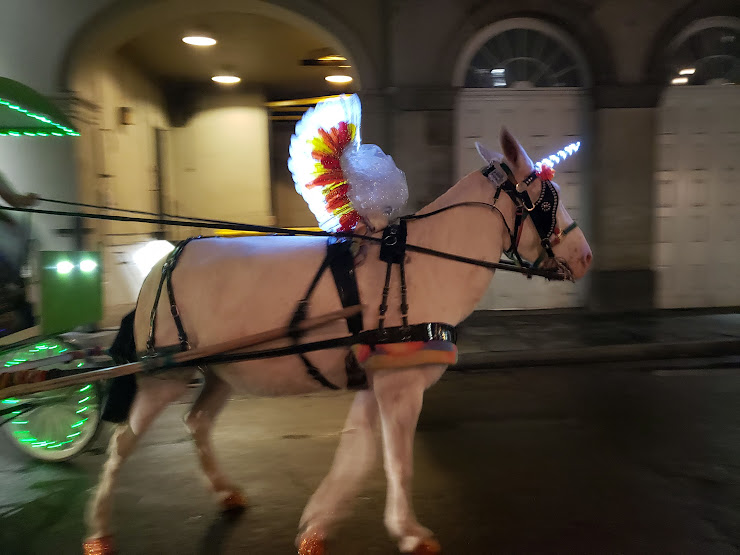
We ended at the infamous LaLaurie Mansion, where socialite Delphine LaLaurie committed unspeakable cruelty toward enslaved people. The street was closed for filming—rumor had it, The Originals, though the timeline didn’t actually line up. Still, the gothic energy fit. We finished the night at Lafitte’s Blacksmith Shop Bar, one of the oldest bars in America, where I ordered a Voodoo Daiquiri and toasted to ghosts, good storytelling, and very sore feet.
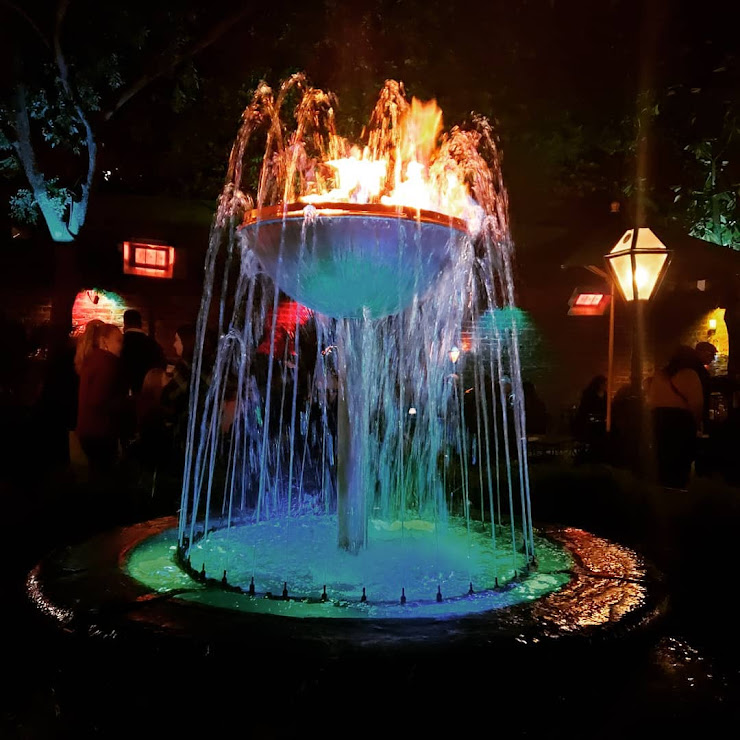
After the tour, we stumbled into Pat O’Brien’s. You walk in and there’s a cozy bar room to the left, and to the right a dueling-piano lounge where two baby-grands face off like musical gladiators—song requests flying, the crowd shouting, the energy crackling. If you keep walking straight, you arrive in the courtyard under the stars, around a glowing fountain and beneath space heaters that keep the chilly air from stealing your buzz. We ordered their famed Hurricanes (yes, plural), and between the drink’s punch and that back-patio ambiance, this place vaulted straight into our “must return” list.
Day Three — Beignets and a Boat Ride
The next morning began with the Gray Line Super City Tour, a half-day overview of New Orleans’ neighborhoods and culture. We passed by St. Louis Cemetery No. 3, admired from afar, and soaked in the stories of the city’s layered history.
Once dropped off near Jackson Square, we headed straight for Café du Monde—because powdered sugar waits for no one. Those beignets were divine (though I still have a soft spot for the ones at N’Orlins in Frankenmuth). We browsed the French Market, where vendors sold everything from voodoo charms to handmade art, then circled back to the Pharmacy Museum—this time during open hours.
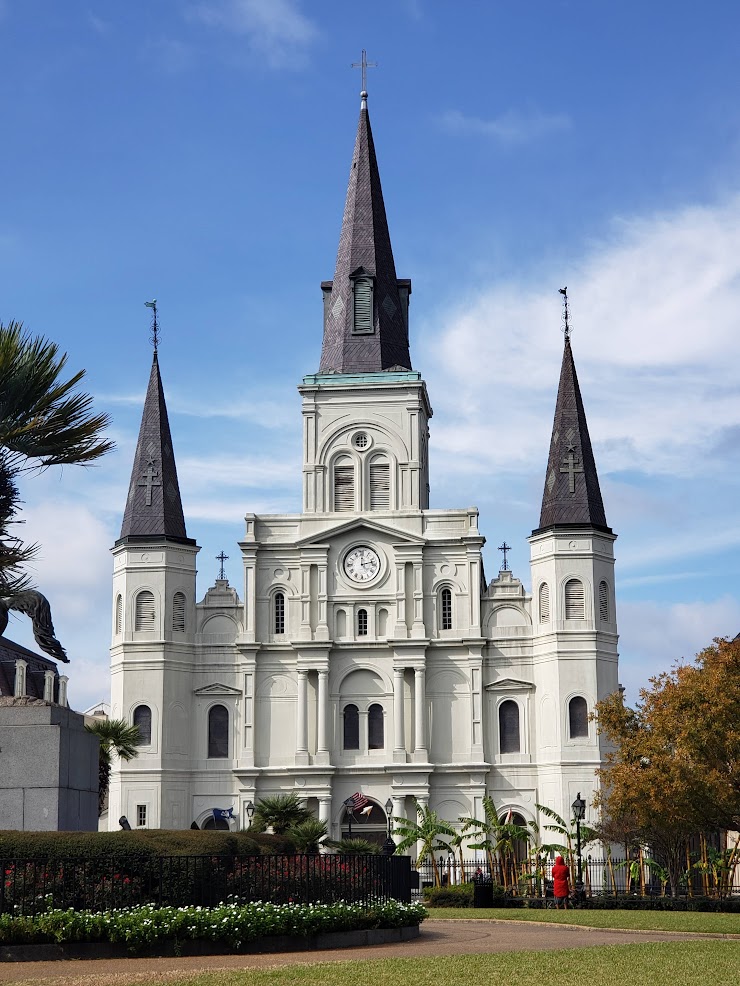
Inside, we learned about 19th-century medicine in all its terrifying glory: cocaine-infused toothache drops, leeches for “bad humors,” and bizarre beauty treatments that would make modern dermatologists faint. The exhibits were beautifully preserved—old wooden shelves lined with glass bottles and handwritten labels.
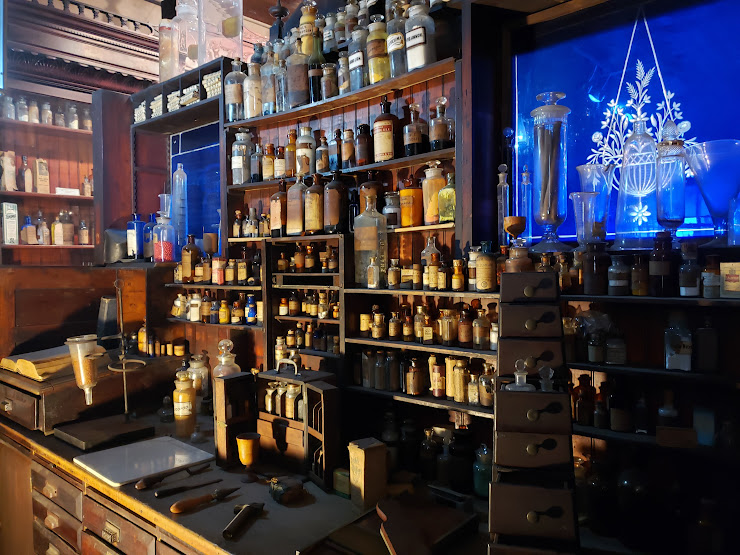
That afternoon, we boarded the Steamboat Natchez or a jazz cruise and lunch on the Mississippi. The music was incredible, the air crisp, and somewhere in between bites of jambalaya, I overheard a woman talking about her recent bariatric surgery. We chatted for a while—she was still learning her limits with food, and I was quietly storing that conversation away for the future. We were even able to go below deck afterward to see the engine room and learn how the steamboat was operated—massive pistons, brass gauges, and crew working in rhythm with the music above. It felt like stepping straight into another century.
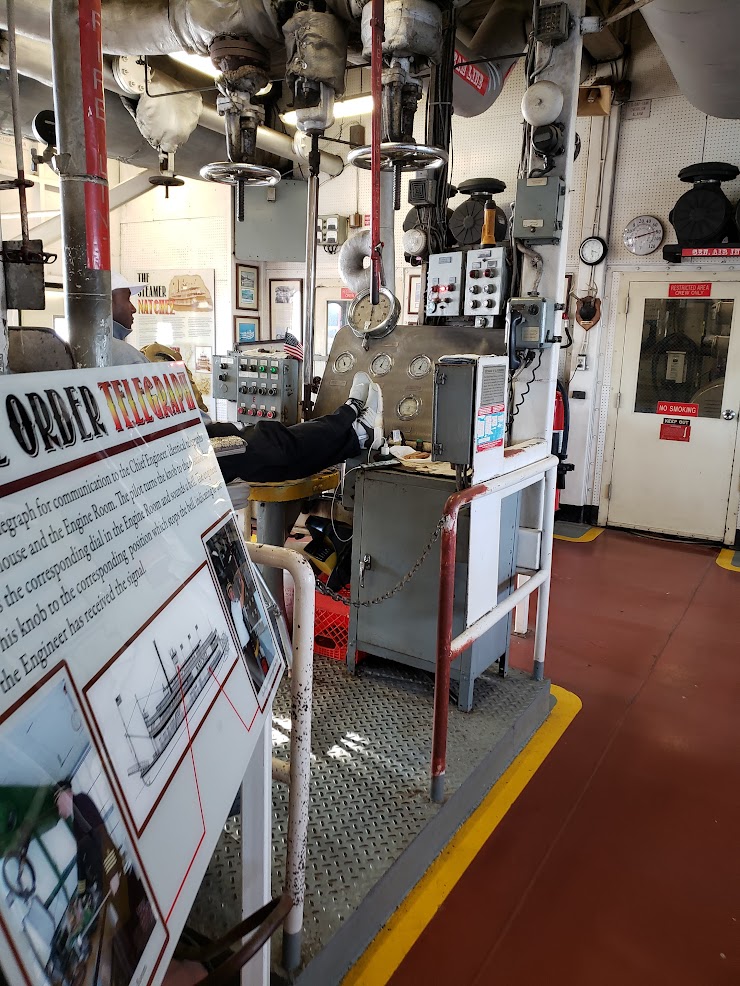
We checked into the Hyatt Regency that evening for my conference, passing the Hard Rock Hotel along the way—its upper floors had recently collapsed during construction due to structural failures that tragically killed three workers. A grim sight against the skyline.
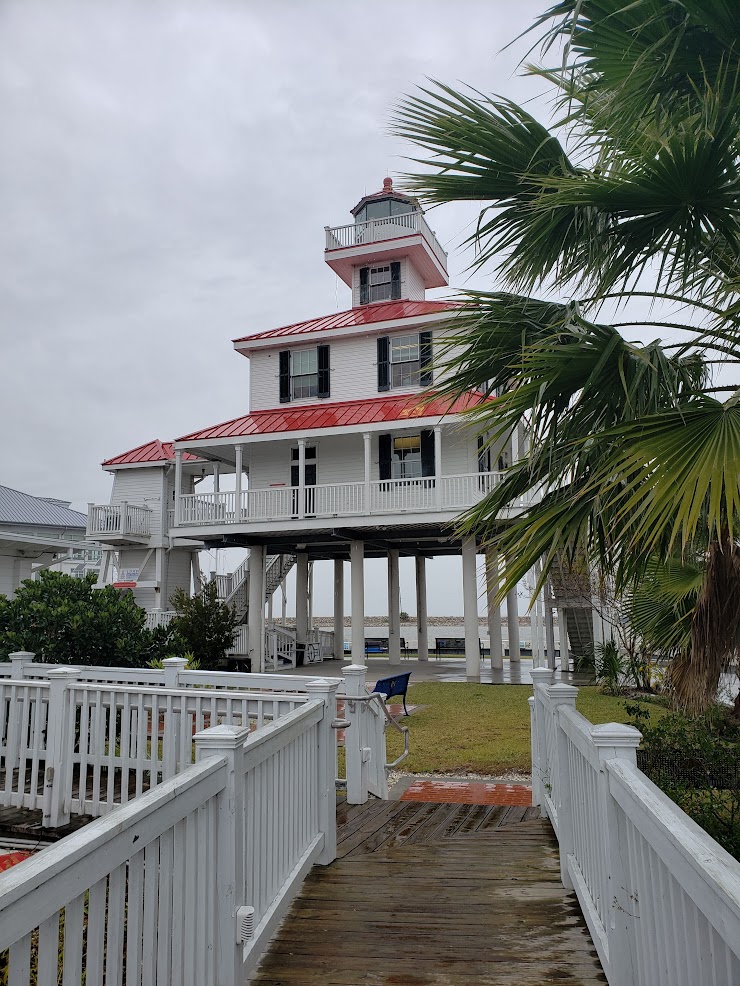
After check-in, we toured the New Canal Lighthouse before dinner at Hard Rock Café.
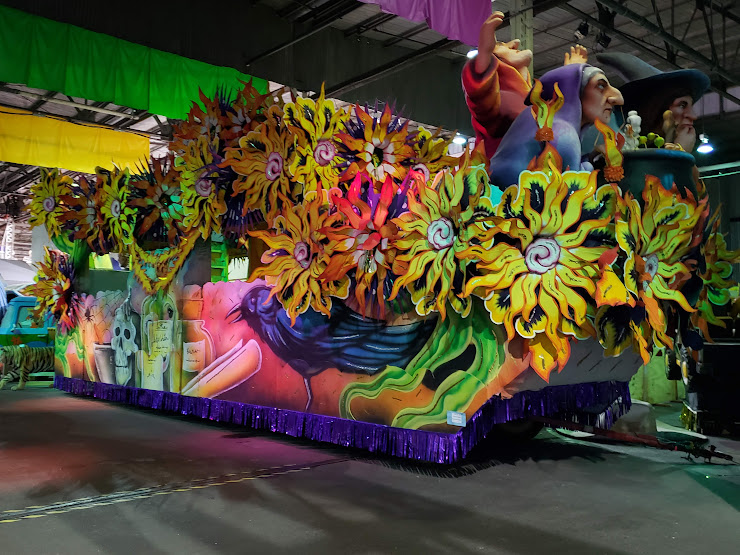
We almost missed out but managed to make it to Mardi Gras World, where we got a behind-the-scenes look at how New Orleans builds its magic. The floats were massive—bright, intricate, and detailed down to the last feather and bead. Artists were still at work on pieces for the next parade season, and the warehouse smelled faintly of paint and papier-mâché. During the tour, we learned about the tradition of King Cake and were served slices to sample. One of the other guests ended up finding the tiny plastic baby hidden inside, which, according to tradition, means good luck—and the responsibility of bringing the cake next time.
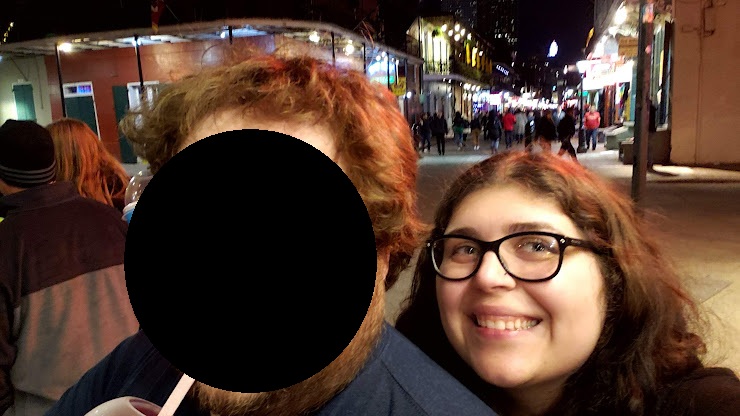
We wrapped up the evening by swinging into the Carousel Bar, where the circular bar itself slowly spins as you sip—equal parts whimsical and dizzying. After that, we wrapped up the evening wandering Bourbon Street, where music poured out of every doorway like a living jukebox. The temperature was cool but comfortable, the crowds light. We even stopped by Marie Laveau’s House of Voodoo, named after the city’s legendary priestess who blended Catholicism with African spiritual practices and became one of the most respected women in New Orleans history.
Day Four — Aquariums, Parakeets, and a Two-Headed Snake
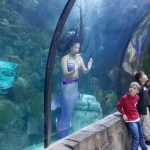
The conference wrapped early the next day, and with our luggage safely stored at the hotel (a perk most travelers don’t realize exists), we spent the afternoon at the Audubon Aquarium.
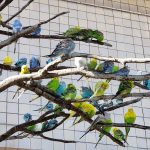
We hand-fed stingrays—slimy little vacuum cleaners—and then wandered into Parakeet Point, an enclosure full of hundreds of parakeets you can feed. At one point, I had around forty perched on me, while my ex-husband befriended one particularly needy bird we named Pockets because he tried to crawl into his jacket pocket. Unfortunately, the staff does pat-downs before you leave, so Pockets had to stay behind.
Next was the Audubon Zoo. We didn’t have long, but we took the narrated train ride and passed the building that houses Nicolas Cage’s donated two-headed snake—yes, really—which the zoo still displays as a living oddity. Somewhere between awe and “of course he did.”
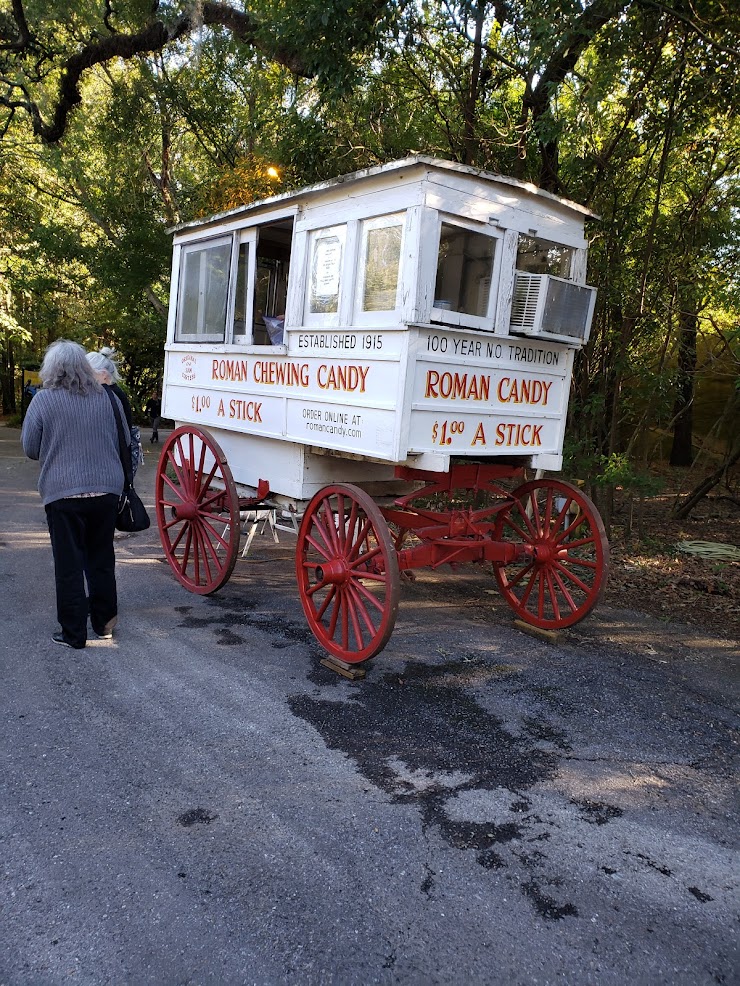
We grabbed taffy from a nearby wagon, which ended in disaster when his piece ripped out a dental crown. My dentist later laughed and said, “Yeah, don’t do that again.”
Then came the long trip home. We caught flights back to Chicago (it was cheaper for my ex-husband to fly out of Chicago than Detroit), reunited there, grabbed Sonic on the drive home, and gleefully rubbed it in Lori’s face.
Reflections from the Bayou
New Orleans worked its way into our bones. Somewhere between the beignets, jazz, and haunted balconies, it became one of our Top Five Favorite Places. We even joked about retiring there instead of Florida. There’s just something about that energy—intoxicating, magnetic, impossible to explain.
And no, it’s not the hurricanes. 😂🍹
Side note: Food is my favorite form of culture, and New Orleans did not disappoint. The Po’ Boy—born during the 1929 streetcar strike to feed out-of-work laborers—was cheap, filling, and absolutely iconic. The grits, however… even after I assaulted them with cheese, salt, and green onions, they still tasted like disappointment in a bowl.
Side note: Food is my favorite form of culture, and New Orleans did not disappoint. The Po’ Boy—born during the 1929 streetcar strike to feed out-of-work laborers—was cheap, filling, and absolutely iconic. The grits, however… even after I assaulted them with cheese, salt, and green onions, they still tasted like disappointment in a bowl.
Leave a Reply