
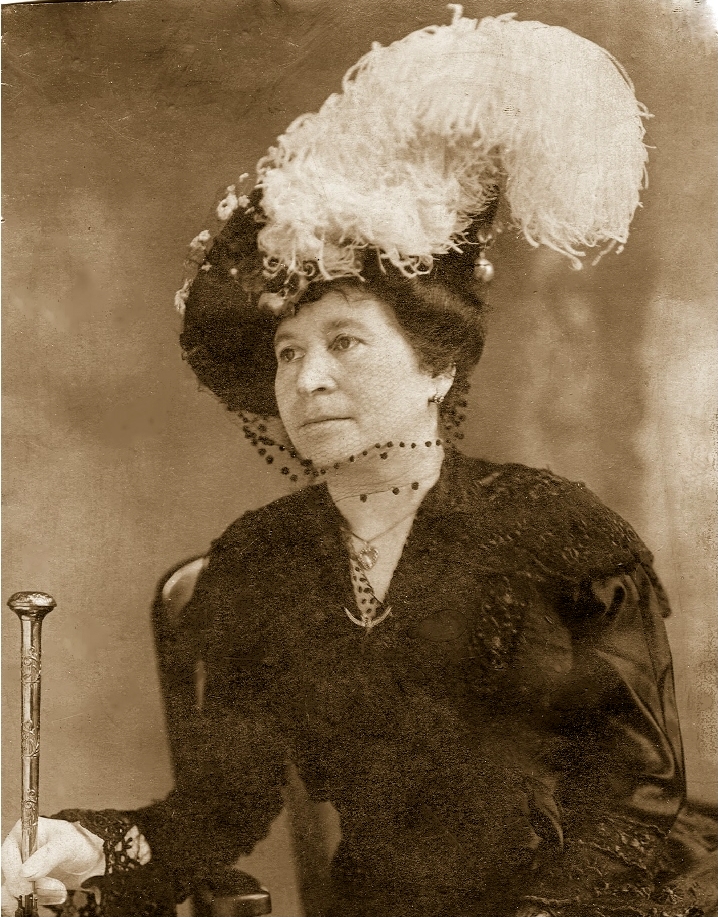
The Matriarch Who Defied the Law to Protect Women
If rebellion runs in my blood, Lucia is where it started. Born in Italy on December 13, 1872, she grew up in a country where women’s education was rare but not impossible. In fact, Italy was one of the first nations to allow women to study and lecture in universities—a radical stance for the era. That small crack in the door was all Lucia needed.
Her father, a chemist known as Professor Angelo, and her mother, Mary, an opera singer, created a household steeped in intellect and independence. Lucia studied medicine in Italy and became a doctor—likely a midwife—before emigrating to America in 1907 with her step-father aboard the SS Deutschland. It was a time when southern Italy was impoverished, families were leaving by the thousands, and opportunity lived across an ocean.
But if she expected freedom, America offered only a different kind of restraint. Women doctors made up less than five percent of the field and were often dismissed as “unfit” for professional medicine (Tribal Health, 2023). So Lucia carved her own path.
The Arrest
Lucia was known for helping women—especially those with nowhere else to turn. Her compassion eventually crossed into defiance. When authorities discovered she had been performing abortions in secret, she was arrested.
At that time, abortion was illegal in both Europe and America, and women physicians who defied those laws risked ruin or institutionalization (Drife, 2010). Most would have stopped. Most would have broken. But not Lucia.
After her release, she changed her name to Lydia, married again, and kept practicing under the radar. Her work wasn’t about rebellion for rebellion’s sake—it was about survival. Every woman she helped was an act of quiet resistance, every procedure a promise that she would not let desperation win.
Pants, Power, and the Quiet Rebellion
And here’s my favorite detail: Lucia refused to wear skirts. She was a doctor—and she wanted to dress like one. Her male peers mocked her for it, but she didn’t care. She had already broken one rule simply by existing in that space—why stop there?
Her decision wasn’t about fashion. It was about authority. Ownership. She was claiming space in a profession—and a world—that told her she didn’t belong.
The Legacy
Lucia was many things: doctor, mother, survivor, outlaw. But to me, she’s the mirror I hold up when I wonder where my stubborn streak comes from. She’s the reason I believe compassion and defiance can coexist.
Her story didn’t end in an arrest record. It lived on through the women she healed, the children she saved, and the daughters who came after her—all of us still carving out space in systems built to exclude us.
Some people inherit jewelry or land.
I inherited defiance.
And I wear it well.
References
Drife, J. O. (2010). Historical perspective on induced abortion through the ages. Journal of the Royal Society of Medicine, 103(6), 247–252. https://doi.org/10.1258/jrsm.2010.100082
Tribal Health. (2023, March 1). A brief history of women in medicine. https://tribalhealth.com/history-of-the-female-physician/
Leave a Reply